Why do some people look energetic, lean, and young at 40… while others feel exhausted, foggy, and older at just 30?
What if the real difference isn’t skincare, supplements, or genetics… but something happening inside your blood every single day? Something invisible. Something silent. Something most people never check until it’s too late.
Right now, your blood sugar is rising and falling based on everything you eat, drink, stress, and even how you sleep. And every spike is sending a signal to your body: “Age faster.”
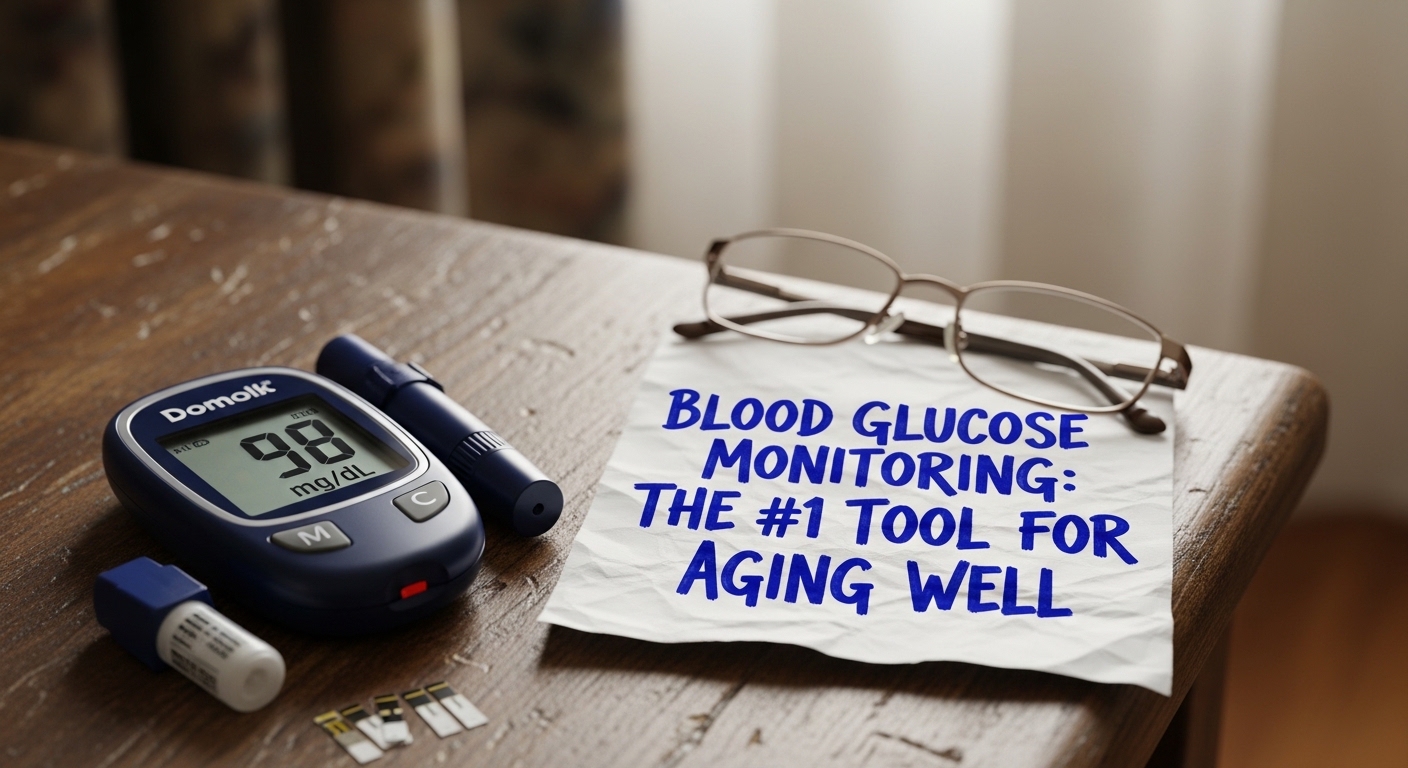
This is where blood glucose monitoring becomes the most powerful anti-aging tool most people are ignoring.
The Silent Problem: Your Body Is Aging From Sugar Spikes You Don’t Feel
You might not notice it now… but your body is silently aging faster. Modern life is designed around constant glucose spikes. Sweet drinks, processed snacks, late-night eating, stress eating, and irregular sleep cycles all push your blood sugar out of balance.
The worst part? You don’t feel most of these spikes in real time.
But inside your body, every spike is creating damage. Every crash is draining energy. And every unstable cycle is pushing your system closer to fatigue, inflammation, and faster aging.
Over time, this leads to low energy, brain fog, stubborn fat gain, poor sleep, and dull skin.
It feels like “normal life stress”… but biologically, it is accelerated aging.
The Science Made Simple: Why Blood Glucose Controls Aging
Let’s keep it simple.
Your blood glucose is your body’s main energy source. When it rises too high too often, your body releases insulin to control it. This is normal.
But when this happens repeatedly every day, your system becomes overloaded.
High blood sugar leads to oxidative stress—this is like internal rust forming in your cells. It damages proteins, DNA, and mitochondria (your energy engines). This accelerates cellular aging.
It also disrupts your circadian rhythm, which controls sleep, recovery, and hormone balance. When blood sugar is unstable, your body struggles to enter deep repair mode at night.
Over time, inflammation increases, energy drops, and aging speeds up.
This is why blood glucose stability is directly linked to longevity.
The Hidden Truth: Aging Is a Blood Sugar Pattern Problem
Most people think aging is random. But it’s actually patterned.
Stable blood sugar = stable energy, slower aging, better focus
Unstable blood sugar = fatigue, cravings, faster aging, inflammation
And here is the most powerful insight:
You cannot manage what you do not measure.
This is why blood glucose monitoring is becoming one of the most important longevity habits in the world today.
Because once you see your real data, your behavior changes instantly.
Why Blood Glucose Monitoring Is a Game-Changer for Longevity
A blood glucose monitor (especially continuous glucose monitors or simple finger-prick tests) shows you exactly how your body reacts to food, stress, sleep, and exercise.
It removes guesswork.
Instead of wondering “Is this healthy?”, you know.
Instead of assuming “I eat well”, you see the truth.
And this awareness alone can completely transform your health decisions.
This is not just tracking—it is feedback for your biology.
And feedback is what creates change.
9 Powerful Longevity Habits to Stabilize Blood Glucose
1. Start Tracking Your Blood Sugar (Awareness Changes Everything)
When you track your glucose, you finally see how your body reacts in real time. This helps you understand what accelerates or slows aging in your personal biology. Action step: Use a glucose meter or CGM for a few weeks to learn your patterns.
2. Avoid Liquid Sugar (The Fastest Aging Trigger)
Sugary drinks spike blood glucose instantly and violently. This creates stress on your cells and accelerates aging faster than most foods. Action step: Replace sodas and juices with water, herbal tea, or black coffee.
3. Walk After Meals (Stabilize Blood Sugar Naturally)
Movement after eating helps your muscles absorb glucose efficiently, preventing spikes. This is one of the simplest anti-aging habits. Action step: Walk 10–15 minutes after every major meal.
4. Eat Protein First (Flatten Glucose Spikes)
Protein slows down glucose absorption, reducing sharp spikes that damage cells. Action step: Start meals with eggs, lentils, or lean protein before carbs.
5. Practice Intermittent Fasting (Reset Metabolic Balance)
Fasting lowers baseline glucose and improves insulin sensitivity. This supports long-term anti-aging effects. Action step: Begin with a 12–14 hour overnight fasting window.
6. Improve Sleep (Control Blood Sugar Hormones)
Poor sleep increases insulin resistance and makes blood sugar harder to control. This speeds up aging silently. Action step: Sleep 7–8 hours and avoid screens before bed.
7. Reduce Refined Carbs (Stop Hidden Glucose Spikes)
White bread, pastries, and processed foods turn into sugar quickly, spiking glucose levels. Action step: Replace refined carbs with whole grains and fiber-rich foods.
8. Manage Stress (Prevent Emotional Blood Sugar Spikes)
Stress raises cortisol, which increases blood sugar even without food. This is a hidden aging accelerator. Action step: Practice deep breathing or meditation daily.
9. Exercise Regularly (Improve Glucose Efficiency)
Exercise makes your cells more sensitive to insulin, meaning your body uses glucose more efficiently. Action step: Combine strength training and cardio 4–5 times per week.
Ancient Wisdom Angle: The Forgotten Art of Balance
Ancient traditions did not have glucose monitors—but they understood balance deeply.
Fasting, mindful eating, breath control, and physical discipline were all designed to stabilize internal energy and prevent overload.
Modern science now confirms this: stable internal balance = slower aging.
What was once called discipline is now called metabolic health.
What was once called fasting is now called glucose regulation.
The wisdom was always there—we are just rediscovering it.
Imagine Your Life With Stable Blood Sugar…
Imagine waking up without fatigue. Your energy feels steady throughout the day. No crashes after meals. No sudden cravings controlling your mind.
Your body feels lighter. Your focus becomes sharper. Your mood feels stable.
Your skin looks clearer, your sleep becomes deeper, and your confidence rises naturally.
You no longer feel like your body is working against you—you feel in control.
This is what happens when blood glucose becomes stable and your longevity habits support your biology.
The Reality Check: Every Spike Has a Cost
Every sugar spike may feel small in the moment—but inside your body, it is creating long-term damage.
But here is the hopeful truth: your body is designed to recover.
Every stable meal, every walk, every fasting window, every good night of sleep—these are repair signals.
You are either accelerating aging or slowing it down.
There is no neutral state.
Start Today… Not When Symptoms Appear
You don’t need to wait for diabetes, fatigue, or weight gain to start caring.
Start now.
Start simple.
Track one habit. Fix one meal. Add one walk.
Because awareness is the beginning of control.
And control is the beginning of longevity.
Final Thoughts: The Simplest Anti-Aging Tool You’ve Been Ignoring
Blood glucose monitoring is not just a health trend—it is a mirror into your biology.
It shows you the truth your body has been hiding.
And once you see the truth, you cannot unsee it.
If you want to slow aging, improve energy, and live longer naturally, you must learn to stabilize your blood sugar through consistent longevity habits.
Not perfection.
But awareness.
Because the real secret to anti-aging is not guessing—it is measuring, understanding, and adjusting your daily life before damage becomes permanent.